Cryptocurrencies all
This isn’t surprising. The EU tends to be slow when it comes to regulation but what does come out has a big impact on global payments and sets an example. Around the world, everyone’s eyes are on this, so the EU has chosen to take its time once again comic play casino. You will remember that PSD3 has, so far at least, been more about allowing the EU to supervise and enforce SCA centrally instead of relying on country-state level regulators, as well as about open banking.
Meanwhile, cryptocurrencies are finding mainstream acceptance in retail, driven by platforms like PayPal and Mastercard. The advent of decentralized stablecoins addresses volatility concerns, further legitimizing crypto payments.
In a report presented at SIBOS, McKinsey encapsulates the 2025 payments landscape as “simpler interfaces, complex reality.” This phrase reflects how user-facing payment interfaces are becoming more intuitive, while the underlying systems grow increasingly intricate.
There are use cases where cards make perfect sense. But there are also moments, especially for larger ticket purchases or recurring payments, where direct bank transfers or account-based payments create more value.
Do all cryptocurrencies use blockchain
By integrating blockchain into banks, consumers might see their transactions processed in minutes or seconds—the time it takes to add a block to the blockchain, regardless of holidays or the time of day or week. With blockchain, banks also have the opportunity to exchange funds between institutions more quickly and securely. Given the sums involved, even the few days the money is in transit can carry significant costs and risks for banks.
This could become significantly more expensive in terms of both money and physical space needed, as the Bitcoin blockchain itself was over 600 gigabytes as of September 15th, 2024—and this blockchain records only bitcoin transactions. This is small compared to the amount of data stored in large data centers, but a growing number of blockchains will only add to the amount of storage already required for the digital world.
The other issue with many blockchains is that each block can only hold so much data. The block size debate has been and continues to be one of the most pressing issues for the scalability of blockchains in the future.
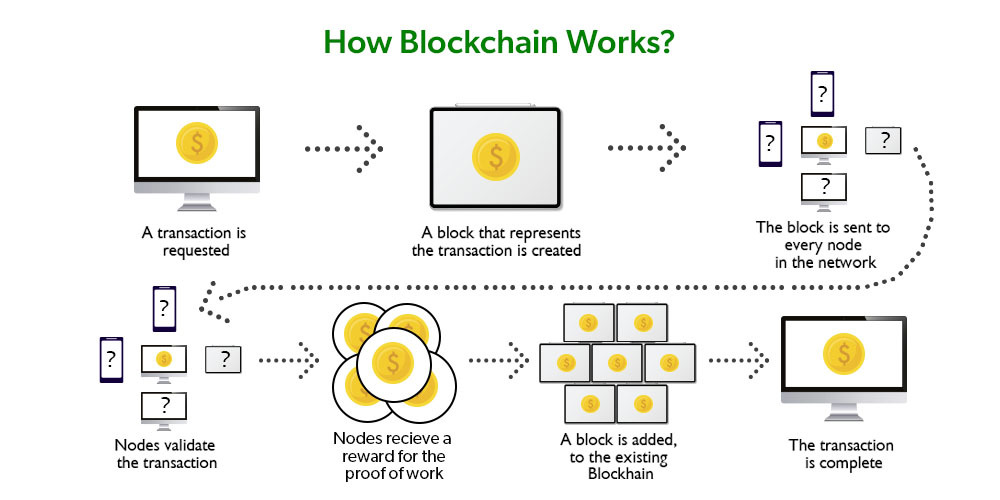
By integrating blockchain into banks, consumers might see their transactions processed in minutes or seconds—the time it takes to add a block to the blockchain, regardless of holidays or the time of day or week. With blockchain, banks also have the opportunity to exchange funds between institutions more quickly and securely. Given the sums involved, even the few days the money is in transit can carry significant costs and risks for banks.
This could become significantly more expensive in terms of both money and physical space needed, as the Bitcoin blockchain itself was over 600 gigabytes as of September 15th, 2024—and this blockchain records only bitcoin transactions. This is small compared to the amount of data stored in large data centers, but a growing number of blockchains will only add to the amount of storage already required for the digital world.
Cryptocurrencies all
Almost. We have a process that we use to verify assets. Once verified, we create a coin description page like this. The world of crypto now contains many coins and tokens that we feel unable to verify. In those situations, our Dexscan product lists them automatically by taking on-chain data for newly created smart contracts. We do not cover every chain, but at the time of writing we track the top 70 crypto chains, which means that we list more than 97% of all tokens.
Related Links Are you ready to learn more? Visit our glossary and crypto learning center. Are you interested in the scope of crypto assets? Investigate our list of cryptocurrency categories. Are you interested in knowing which the hottest dex pairs are currently?
Each of our coin data pages has a graph that shows both the current and historic price information for the coin or token. Normally, the graph starts at the launch of the asset, but it is possible to select specific to and from dates to customize the chart to your own needs. These charts and their information are free to visitors of our website. The most experienced and professional traders often choose to use the best crypto API on the market. Our API enables millions of calls to track current prices and to also investigate historic prices and is used by some of the largest crypto exchanges and financial institutions in the world. CoinMarketCap also provides data about the most successful traders for you to monitor. We also provide data about the latest trending cryptos and trending DEX pairs.
NFTs are multi-use images that are stored on a blockchain. They can be used as art, a way to share QR codes, ticketing and many more things. The first breakout use was for art, with projects like CryptoPunks and Bored Ape Yacht Club gaining large followings. We also list all of the top NFT collections available, including the related NFT coins and tokens.. We collect latest sale and transaction data, plus upcoming NFT collection launches onchain. NFTs are a new and innovative part of the crypto ecosystem that have the potential to change and update many business models for the Web 3 world.